
Quay County’s Multi-Day Arrest Log
Eastern New Mexico News carries the best recurring series of Quay County jail logs available to readers. Recent items stretch across a week or several days. One covered August 19 through 26. Another ran July 11 through 18. None of them cover just the prior 24 hours, so trust the range stated in each article.
These are text summaries built from detention booking information. They are not official QCDC results. The publisher does not promise that every booking appears, and there is no hourly refresh. The strength of the series is breadth: several days of Quay County arrest activity collected into one readable item.
The publisher's news section places dated jail-log items alongside other regional coverage. Open the Eastern New Mexico News jail-log section to see the newest entry and the dates it spans.
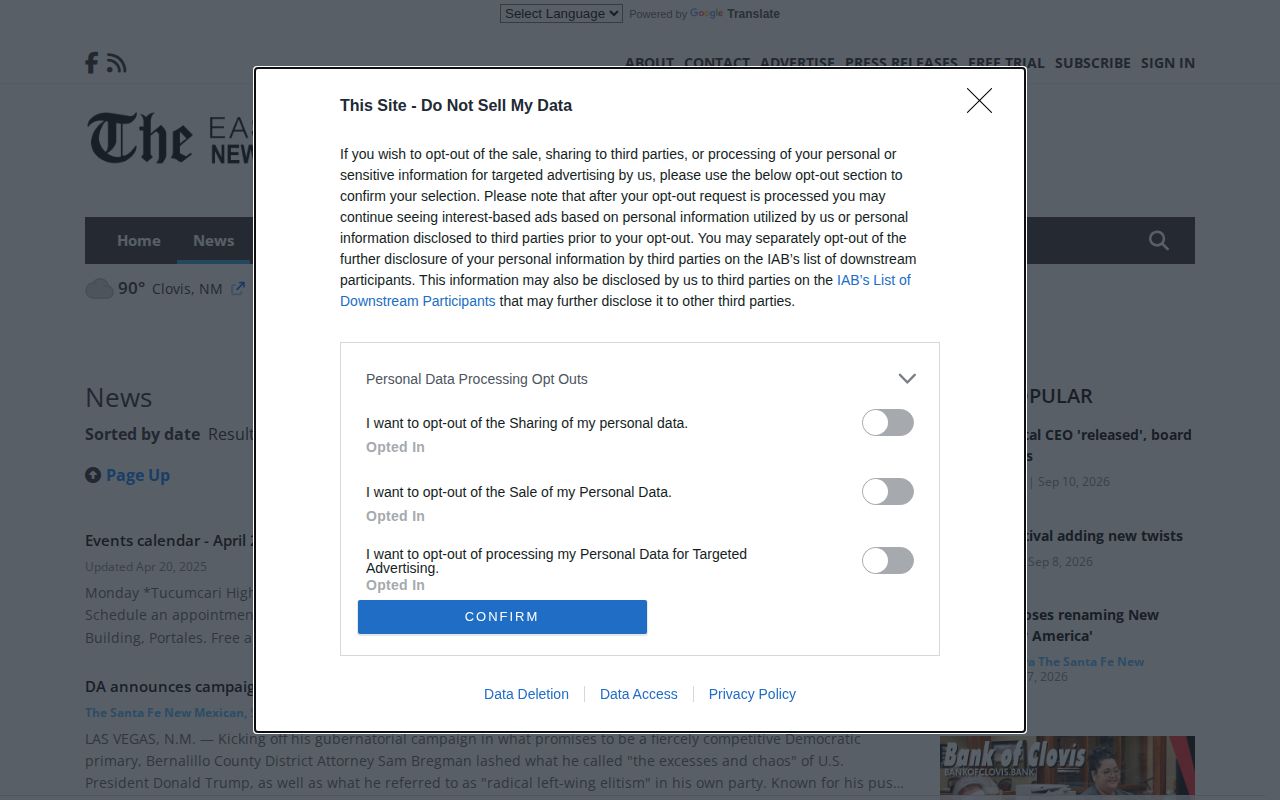
The capture documents a news archive, not an official county custody screen.
Read the Quay Arrest Blotter
Start with the story date and its stated booking range. A Wednesday article might summarize the whole prior week. Match the identity fields and charge language carefully. The entry alone does not prove current custody.
- Open the jail-log section and select the newest dated Quay item.
- Read the article’s opening lines for its start and end dates.
- Match the full name, age, and residence when those fields appear.
- Copy the charge wording as an charge, not a court result.
- For current custody or omitted details, contact QCDC or request the source record.
For a booking that may have happened today, use the Quay County 24 Hour Arrests page, which follows a contact-first process. The newspaper archive serves history, not the present day.
Note: A dated article can stay online long after release, and no publisher promises how long each story remains available.
Fields in Quay Arrest Entries
Quay arrest entries keep to a compact set of public details. The table below separates what the news log shows from details held elsewhere.
| Log field | How to interpret it |
|---|---|
| Name | Identifies the listed person; confirm similar names carefully. |
| Age | Helps with identity but is not a full date of birth. |
| Residence | May name a town or place; it is not the arrest location. |
| Charge or charges | States charges associated with booking, not convictions. |
| Date range | Defines the multi-day period covered by that story. |
| Photo | No routine booking-photo policy was verified in the examples. |
| Current status | Not established by an old article; confirm with QCDC. |
A booking file can hold much more. State records schedules list arrest numbers, booking forms, arresting agencies, bond amounts, release orders, fingerprints, and mug shots among possible contents. The news log does not promise those fields. Ask the holding agency for them. The August 28 jail-log example shows the article format and its multi-day reach.
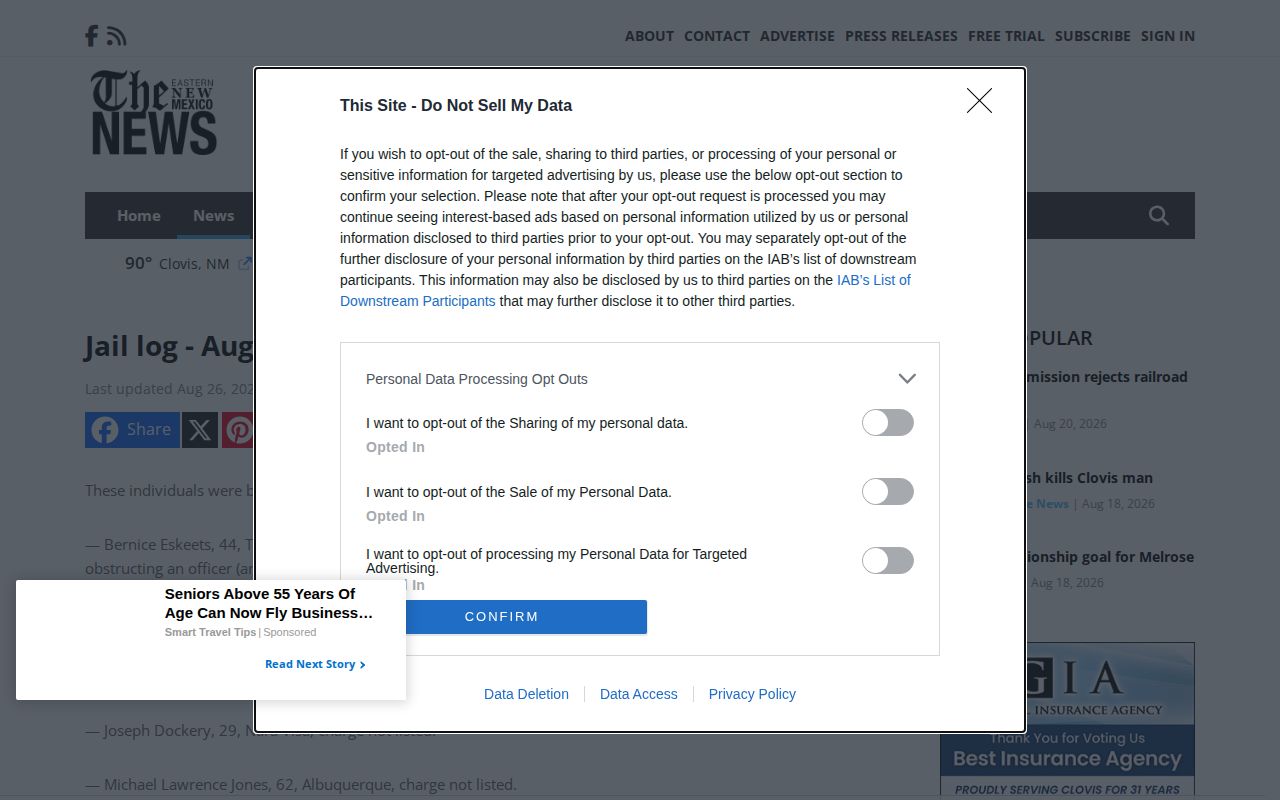
Text entries build useful arrest history. They do not show who remains held.
Quay Weekend Arrest Reporting
No outlet promises a special weekend or holiday publication run. The log simply appears weekly or as available. Bookings from several days can land in one later story. An arrest near the end of a range might not surface until another issue. It might not appear at all. Rely on each article's stated span rather than an assumed cutoff.
Release can come before publication. Someone might also still be held when an older story is read. Current housing is a facility question. QCDC answers it at (575) 461-4664. The official detention page lists its address and administrative context.
Charges follow their own separate track. A prosecutor or court may later change the booking wording. The final result comes from court, not the newspaper. The county arrest records overview explains where those source types diverge.
Quay Arrest Archives and Retention
Older articles often stay reachable through normal news navigation and their direct URLs. The publisher sets no fixed archive depth or deletion calendar. That archive is separate from government retention. A news item can stay indexed after an agency record changes. A source file can persist long after release.
New Mexico's schedule covers jail inmate files. They can be destroyed five years after closure when eligible. Law-enforcement case files get ten years after closure when eligible. These are schedule rules, not promises. A legal hold, audit, litigation, transfer, or local practice can change the handling. Juvenile files follow a distinct schedule.
For an older official record, start with QCDC or QCSO. Request a focused booking or arrest file. Give a name and date range. The State Records Center Heritage Search helps with preserved historical collections. It is not a current jail database. It also does not prove routine QCDC files moved to Santa Fe.
News Beyond the Quay Arrest Log
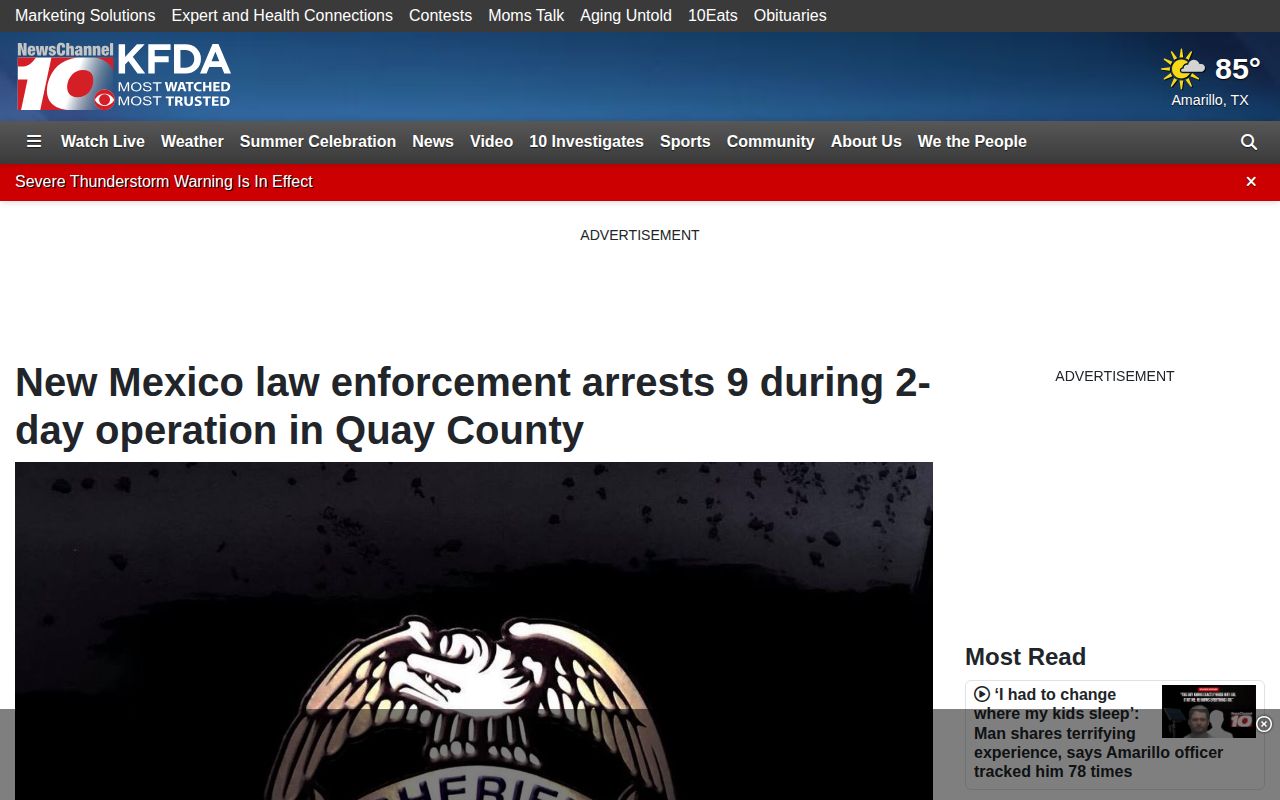
Regional outlets also cover selected operations and wanted-person stories. KFDA NewsChannel 10 reported a two-day 2024 operation with QCSO, New Mexico State Police, and probation officers, tied to Tucumcari, Logan, and San Jon. One operation is not a daily reporting cycle for the county. Read KFDA's Quay County operation report as event-specific context.
News coverage runs in fits and starts. KGNC carries a Crime Stoppers item now and then. A quiet stretch means no reporter wrote a story, not that no one was arrested in Quay County. Official county contacts come first for custody questions and arrest records; the news is background.
Unofficial Quay Arrest Listings
Mugshots.com has a Quay-local page. It is not a QCDC or QCSO service. Its arrest listings can sit stale or thin. The other big aggregators come up empty here. Arrests.org, RecentlyBooked, Busted Newspaper, and Mugshots.zone publish no Quay-local section at all. A guessed county URL is not a source. Start with official agency records, then the dated local news log. If an unofficial Quay County arrest item clashes with a government record, verify the source and check the court outcome. No aggregator proves who is in custody right now. Substitutes fail too, so skip neighboring counties, statewide pages, and similar-sounding names. Before tying any arrest to Quay County, the county label, the source date, and the publication method must all match.
Request an Older Quay Arrest Record
The newspaper is not the only path. QCSO takes records calls at (575) 461-2720; ask for the records custodian. QCDC handles detention files at (575) 461-4664. No separate QCSO records line exists. Make the request precise. Name the person and narrow the dates. Identify the arresting agency if you know it. Say whether you want the arrest report, booking sheet, release order, or booking photograph.
New Mexico treats the two as separate record groups. The state's sheriff file plan closes arrest reports and inmate files on different schedules. One office may hold the incident report while another keeps the booking forms, bond fields, fingerprints, or photo. So ask where the record lives instead of assuming the newspaper got every part of it. For a formal copy, file a written IPRA request. Quay County publishes no special booking-record fee schedule, so confirm any fee and delivery format with the custodian. An agency can redact protected details or withhold a record under a valid rule, and any denial should name the basis it used.
Public Record Search
Sponsored Results